Scent
How to Layer Two Perfumes You Already Own (Using Their Notes)
How to layer two perfumes using their main notes: a 4-step method to check if they work, which goes first, and 6 pairings with the exact spray order.
In this guide
You have two perfumes on your dresser and no idea if they go together. The answer is usually on the box. The main notes tell you whether two scents are likely to work, and which one goes first. No new bottle, no formula.
Here’s a four-step method to compare the notes, pick an order and test the pair before you wear it out. Then six worked examples, with the exact spray order for each.
Step 1: Find the main notes
Look at the box, the product page or the brand’s description. You want the two or three notes listed first or mentioned most often. Long note lists include small details you’ll barely notice, so don’t try to analyze every ingredient.
If one description leads with vanilla and sandalwood, those are your notes. Don’t worry about the faint fruit further down. Do the same with the second perfume and write the main notes side by side.
New to all this? Start with how to layer perfume.
Step 2: Sort the notes by weight
Weight is how a note tends to behave. Light notes are bright and fade first. Heavy notes are richer and stay longest. Medium notes sit in between. These are practical groups, not strict rules: the formula and the concentration can change how long a note lasts.
Find the main notes of your two bottles here:
| Weight | Notes |
|---|---|
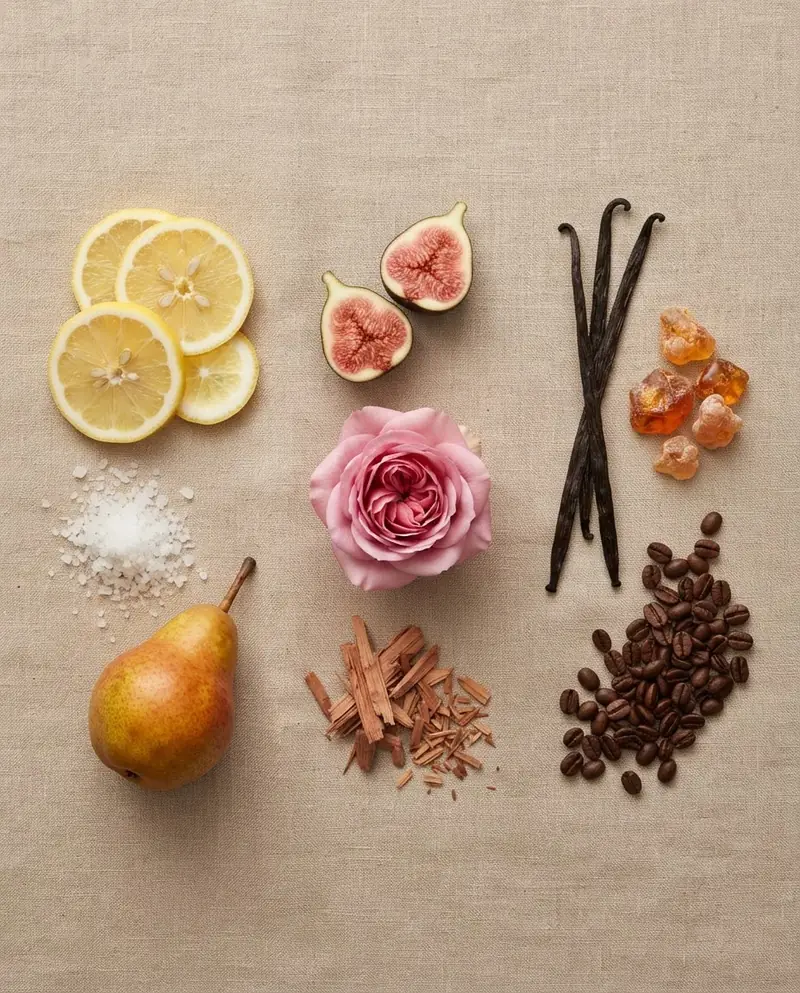
| Light (fades first) | bergamot, orange blossom, pear, raspberry, sea salt, lavender |
| Medium | fig, cherry, rose, jasmine, tuberose, iris, coconut, almond, pistachio, white musk, cedarwood, vetiver |
| Heavy (lasts longest) | vanilla, caramel, coffee, sandalwood, patchouli, amber, oud, tobacco, leather |
Comparing a lot of pairs? Our perfume layering chart shows the note families side by side.
Step 3: Decide the order
If the notes have different weights, the heavier perfume goes on first and the lighter one on top. The heavy one is the base. The light one adds the fresh part you notice at the start.
Use fewer sprays than you would with either perfume alone. Two sprays of the heavier one and one of the lighter is a good starting point. The exception is a strong base like oud, tobacco, leather, patchouli, coffee or caramel: 1 spray of it, 2 of the softer perfume on top. Adjust after testing, because some formulas are much louder than others.
If both main notes have the same weight, don’t stack them. Spray them on different spots, one on your wrists and the other on your neck. You get both scents without piling them up in one place.
Step 4: Test before you commit
Try one new pair a day, so you know what you’re smelling. Spray it on clean skin, wait 15 minutes and smell it. Then smell it again after two hours. The opening is often different from what’s left later.
Write down the two notes, the order, the number of sprays and what you noticed each time. If one note takes over, use one spray less of it next time or move the perfumes to separate spots. If it still feels off, try another pair.
Skin, weather and the formulas all play a part, so a pair that works on a friend can smell different on you. For a simple first routine, see perfume layering for beginners.
6 examples, start to finish
Each of these shows how the weights decide the order. Treat the descriptions as a starting point: the result depends on your perfumes and how strong each one is.
Vanilla + Bergamot
A vanilla latte next to a glass of sparkling water with a twist of citrus. Vanilla gives bergamot a soft, creamy base, and the citrus keeps the sweetness from getting heavy. For a cold day when you want warmth with a fresh edge.
Layering order: Heavy + light. Vanilla first (2 sprays), bergamot on top (1 spray).
Check this pair in the finderSandalwood + Jasmine
A sunny wooden room with a small vase of white flowers on the table. Sandalwood is smooth and grounded, jasmine keeps the wood from feeling dry. A floral with a quiet base.
Layering order: Heavy + medium. Sandalwood first (2 sprays), jasmine on top (1 spray).
Check this pair in the finderRose + White musk
Freshly washed cotton with a few cut roses on top. The rose is easy to recognize, and the musk gives it a soft, clean finish. Separate spots keep each part clear.
Layering order: Medium + medium, so spray them on different spots: rose on the wrists, musk on the neck.
Check this pair in the finderVanilla + Amber
A vanilla candle burning in a warm, dim room. Both notes are strong, so keeping them apart stops the pair from getting too dense. Best for cold weather or evenings.
Layering order: Heavy + heavy, so spray them on different spots: vanilla on the neck, amber on the wrists.
Check this pair in the finderJasmine + Pear
Sliced pear and a few white flowers on a bright kitchen counter. Jasmine is the floral middle, pear adds something juicy and crisp on top. Easy for daytime, especially when it’s warm.
Layering order: Medium + light. Jasmine first (2 sprays), pear on top (1 spray).
Check this pair in the finderFig + Cedarwood
A fig tree next to an old cedar garden bench. Fig is green and a little fruity, cedar is dry and woody. With two medium notes, separate spots let both come through.
Layering order: Medium + medium, so spray them on different spots: fig on the wrists, cedarwood on the neck.
Check this pair in the finderWhen two perfumes don’t work
Some pairs feel crowded instead of balanced. Two very sweet notes can turn sugary. Two heavy, smoky notes on the same spot get dense. And a fresh citrus can seem lost next to a dark oud if you spray a lot of both.
Don’t give up on the pair right away. Try fewer sprays first, or move the perfumes to different spots so they don’t compete. Or swap one for a note with a different weight: a light citrus over a warm vanilla works much better than two deep, smoky scents together.
To figure out why a pair feels off, see perfume layering mistakes. And for the notes that make the easiest bases, read the best perfume bases for layering.
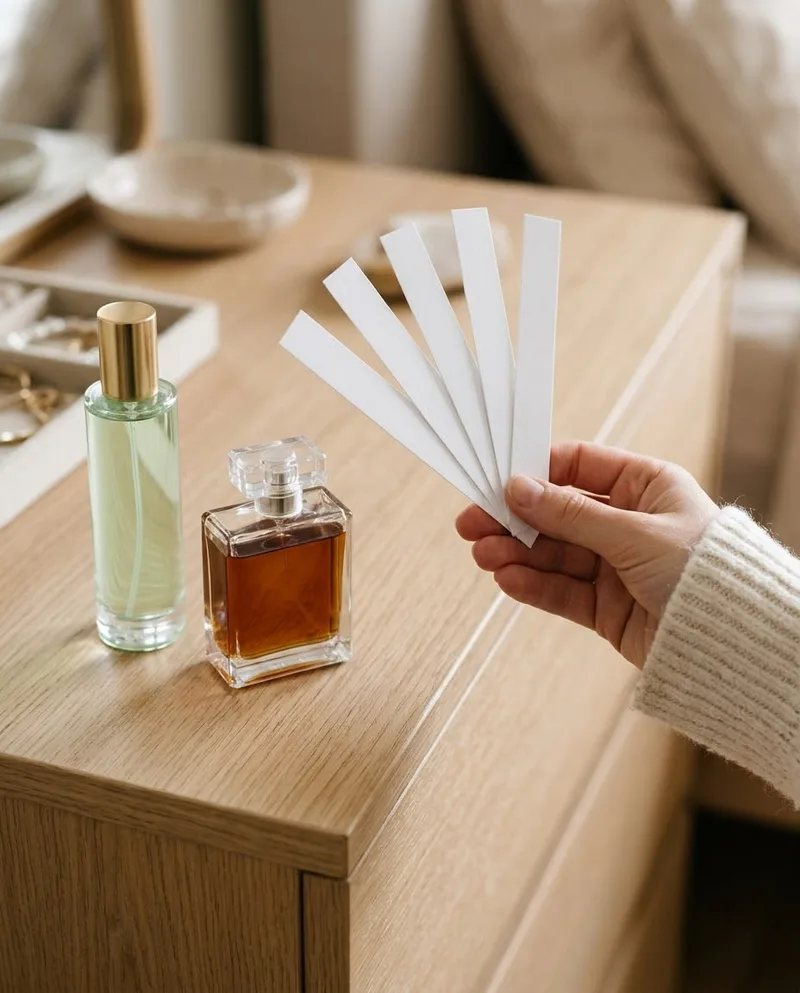
Questions about layering two perfumes
How do I know if two perfumes will go together?
Find the two or three main notes of each, check their weights, and see if one can support the other. Then test a little on paper and on skin. The weights are a guide; the final answer is how the two smell together on you.
Which perfume should I spray first?
The one with the heavier main notes goes first, the lighter one on top. If the main notes have the same weight, put them on separate spots, like your wrists and your neck.
Can I layer two perfumes from different scent families?
Yes. Different families work well when the notes balance each other, like warm vanilla with fresh bergamot or floral jasmine with juicy pear. Look at the notes and their weights, not only the family names.