Perfume Layering Chart: 6 Easy Combinations (Free Printable)
A free printable perfume layering chart with 6 three-note combinations, plus how to read it: which notes are light, medium and heavy, and which one to spray first.
In this guide
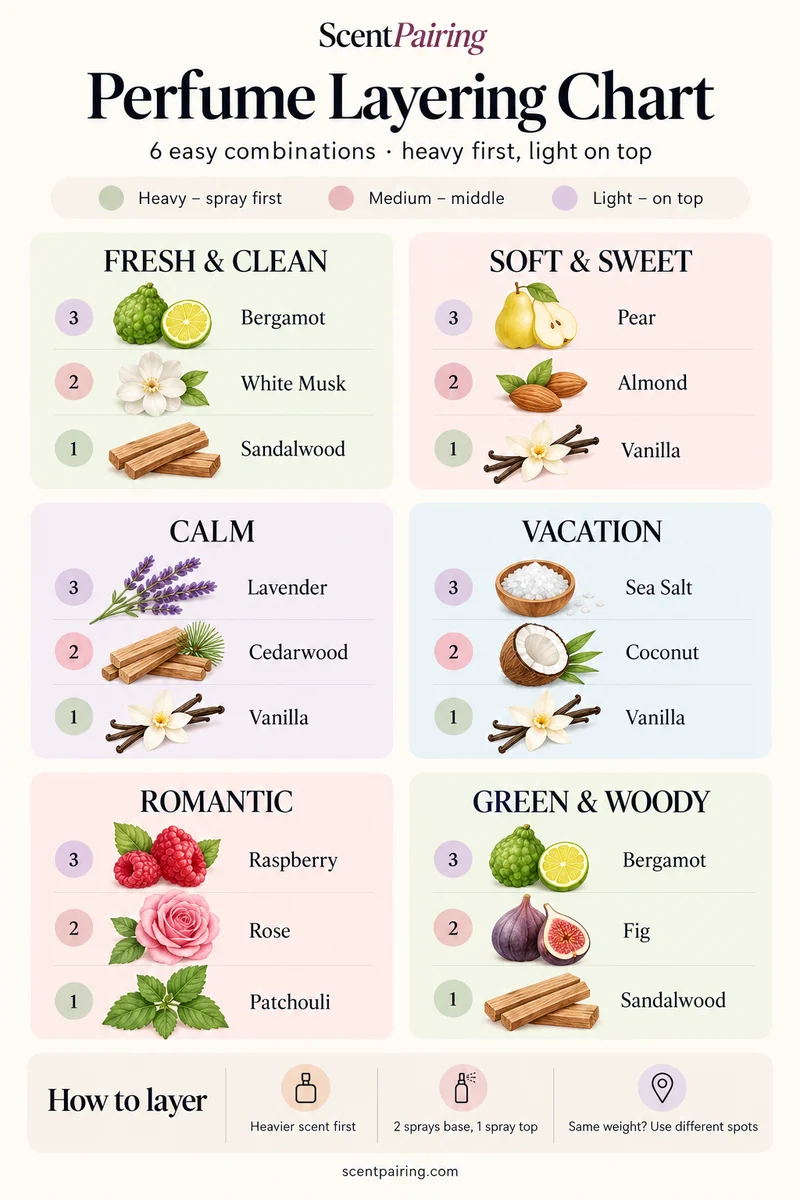
A perfume layering chart shows you which scents go together and in what order to wear them. Our free chart has 6 combinations, each built from a heavy base, a medium middle and a light top, so you can read the order straight off the page: the heaviest note goes on first.
Save it to your phone or print it, then use it with the perfumes you already own.
Download the printable chart
Each card reads from the bottom up: spray 1 first, then 2, then 3 on top. Save the image to your phone, or download the PDF and print it.
Download the free printable chart (PDF, US letter)
How to read a perfume layering chart
Every note on the chart has a weight. The weight tells you how long the note lasts on skin, and that decides the order.
- Heavy notes (vanilla, sandalwood, patchouli, amber, oud) last for hours. They go on first, as the base.
- Medium notes (white musk, rose, cedarwood, almond, coconut, fig) last a few hours. They go in the middle.
- Light notes (bergamot, pear, raspberry, lavender, sea salt) fade first. They go on top.
The rule is simple: heavier first, lighter on top. A light note sprayed under a heavy one gets buried; sprayed on top, it opens the blend and the heavy note carries it.
When two notes have the same weight, layering one over the other doesn’t help either of them. Spray them on different spots instead, like one on the wrists and one on the neck.
You may have seen perfumes described with top, heart and base notes. That’s the same idea inside a single bottle: light notes in the top, medium in the heart, heavy in the base. Our chart uses the same logic across two or three bottles. The weights come from our layering finder, where you can check any note.
The 6 combinations
You don’t need three separate perfumes. Each combination works with two bottles too: a heavy one and a light one, or any two from the same row. Want to wear all three? See how to layer three perfumes.
Sandalwood + White musk + Bergamot
Creamy wood, clean skin and a squeeze of citrus. It smells like fresh laundry on a warm day, an easy everyday scent for the office.
Layering order: Sandalwood first (2 sprays), white musk over it (1 spray), bergamot on top (1 spray).
Check this pair in the finderVanilla + Almond + Pear
Marzipan and warm cream lifted by juicy pear. Sweet but not sugary, closer to a fruit tart than to candy.
Layering order: Vanilla first (2 sprays), almond over it (1 spray), pear on top (1 spray).
Check this pair in the finderVanilla + Cedarwood + Lavender
Clean herbs on dry wood and soft vanilla. Lavender keeps it fresh, cedarwood takes out the sugar. A good unisex pick for cozy nights.
Layering order: Vanilla first (2 sprays), cedarwood over it (1 spray), lavender on top (1 spray).
Check this pair in the finderVanilla + Coconut + Sea salt
Warm skin and a salty breeze. Sea salt keeps coconut and vanilla from turning too sweet in the heat, so go generous on the top layer.
Layering order: Vanilla first (1 spray), coconut over it (1 spray), sea salt on top (2 sprays).
Check this pair in the finderPatchouli + Rose + Raspberry
Jammy rose on dark, earthy patchouli, brightened with berries. Patchouli is strong, so 1 spray is enough. Made for date night.
Layering order: Patchouli first (1 spray), rose over it (2 sprays), raspberry on top (1 spray).
Check this pair in the finderSandalwood + Fig + Bergamot
Milky green fig on smooth wood with a bright citrus opening. Natural and understated, like a walk through a Mediterranean garden.
Layering order: Sandalwood first (2 sprays), fig over it (1 spray), bergamot on top (1 spray).
Check this pair in the finderHow to use the chart with your own perfumes
- Find the main note of each perfume. Look at the notes list on the brand’s site or the box. The first note listed, or the one in the perfume’s name, is usually the main one.
- Find those notes on the chart. Look for a row that shares at least two of them. A perfume led by vanilla and another led by pear fit the “soft and sweet” row.
- Check the weights. Spray the heavier perfume first and the lighter one on top. Same weight? Use different spots.
- Start with 2 sprays of the base and 1 of the top. Then adjust: more top if the blend feels heavy, more base if it fades too fast.
- Wait 20 minutes before you judge. The light notes calm down and the blend settles. That’s how it will smell for most of the day.
For the full method, with where to spray and how to fix a blend that doesn’t work, see how to layer perfume.
Perfume layering mistakes to avoid
- Too many sprays. Two perfumes means twice the strength. Start with fewer sprays than you’d use of one perfume.
- Light notes on the bottom. Bergamot or pear under vanilla disappears in minutes. Light notes always go on top.
- Two loud perfumes at once. Two strong sweet or smoky scents compete instead of blending. Pair a loud one with a quiet one.
- Judging too fast. The first minute smells sharper than the blend you’ll actually wear. Give it 20 minutes.
- Trusting one shared note. Two vanilla perfumes can still clash if one is smoky and the other is sugary. Look at the whole notes list, not just one note.
- Buying before testing. Try the chart with what you already own first. Most people find two or three good combinations without buying anything.
How to make your own layering chart
Once you’ve tried a few rows, build your own around the scents you love:
- If you like fresh scents, start from a white musk or cedarwood base and add bergamot, pear or sea salt on top.
- If you like warm and cozy scents, start from vanilla, sandalwood or amber and add almond, rose or lavender.
- If you like florals, pick rose or jasmine as the middle and put sandalwood or amber under it.
Not sure which perfumes make a good base? Our guide to the best perfume bases for layering covers the 7 most versatile notes. For more ideas by mood, see our 25 perfume layering combinations.
Questions about perfume layering charts
What is a perfume layering chart?
A visual guide that shows which fragrance notes go well together and in what order to wear them. Ours sorts each note as light, medium or heavy, so you know which perfume to spray first.
Which perfume goes first when layering?
The heavier one. Heavy notes like vanilla, sandalwood or patchouli go on first; light notes like bergamot, pear or lavender go on top. If both have the same weight, spray them on different spots.
Do I need three perfumes to use the chart?
No. Every combination works with two perfumes. Pick the heavy note and the light note from a row, or any two notes from the same row.
Can I print the perfume layering chart?
Yes. Download the free PDF above and print it on letter or A4 paper, or save the image to your phone for quick reference.