Perfume Layering for Beginners: A 7-Day Starter Plan
Learn perfume layering in seven days with simple note pairings, easy spray orders, and a phone-friendly way to track what you like.
In this guide
- Before you start
- Day 1: Put the heavier perfume first
- Day 2: Let musk sit under fruit
- Day 3: Warm up a floral with wood
- Day 4: Give a light floral an evening base
- Day 5: Same weight means separate spots
- Day 6: Freshen a base without adding sweetness
- Day 7: Build a pair of your own
- What to write down
- Questions about perfume layering for beginners
You don’t need a new perfume wardrobe to start layering. The bottles you already own are enough to learn how two scents interact, how spray order changes the result, and which combinations feel most like you.
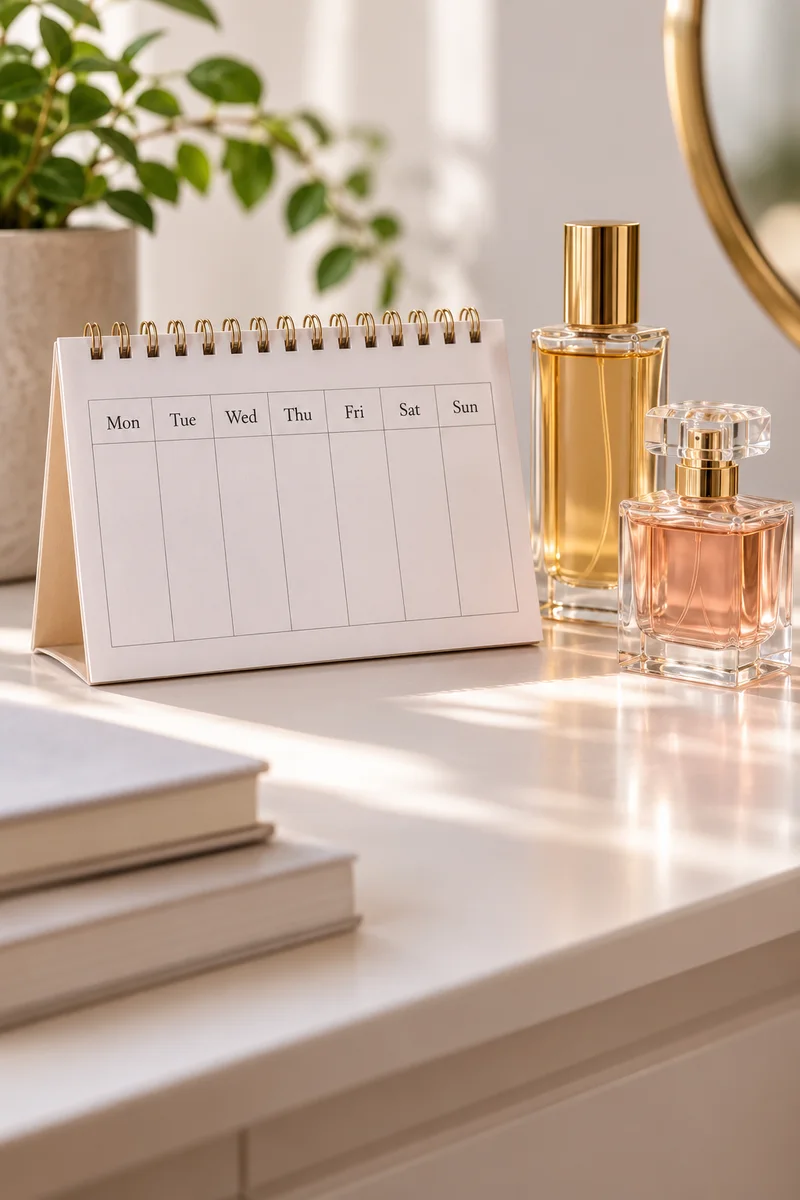
Try one pair a day for a week. Keep the sprays light, give each pairing time to settle, and make a quick note about what you notice. By the end, you’ll have a clearer idea of what to repeat—and what not to layer again.
Before you start
-
Find the main note in two or three perfumes you already own. Check the label or the fragrance description; you only need a useful starting point, not a complete note breakdown.
-
Moisturize first. Apply an unscented lotion and let it settle before spraying so your skin is comfortable and the perfumes have a consistent base.
-
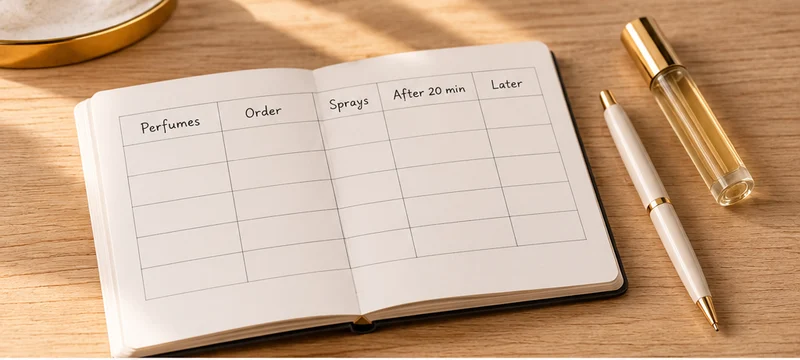
Keep a note on your phone. Record the two perfumes, which went first, the number of sprays, and how the scent changes after 20 minutes and later in the day.
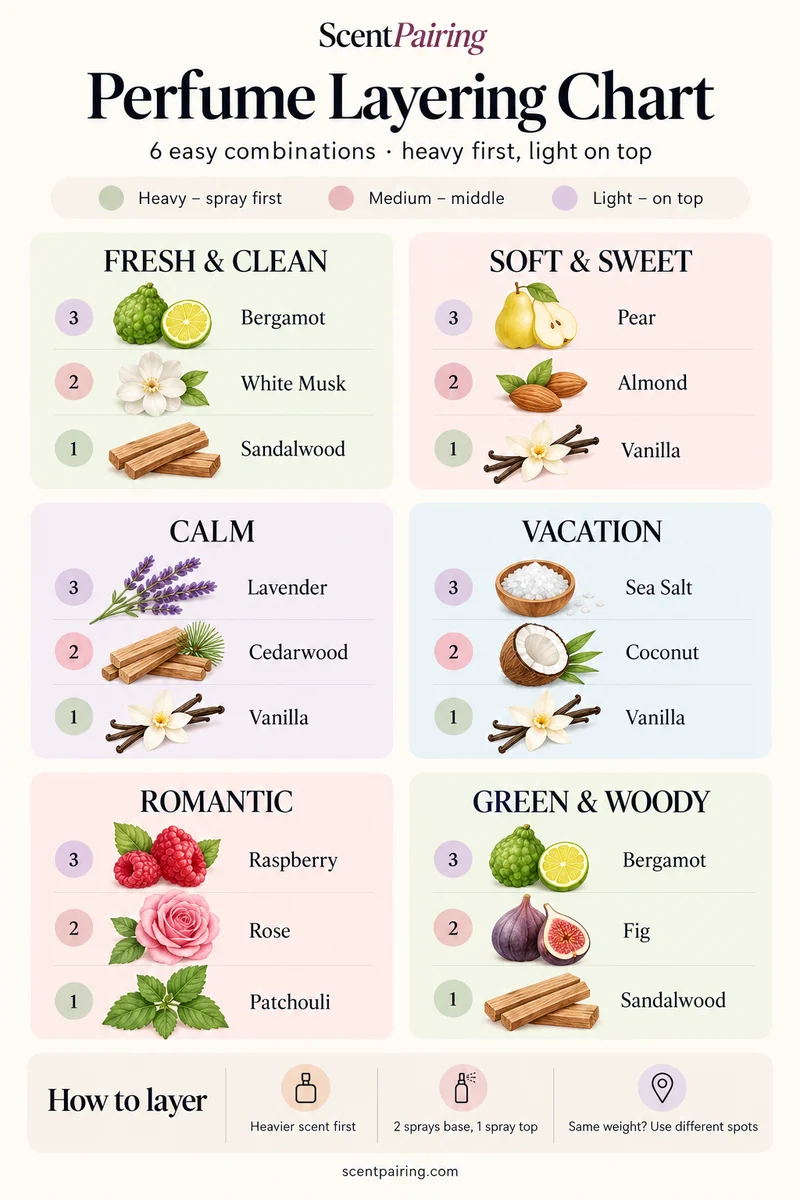
If you want a little more background before the first test, read our guide on how to layer perfume and keep the perfume layering chart handy.
Day 1: Put the heavier perfume first
Today’s lesson: a heavier note should sit underneath a lighter one, so the lighter scent can be noticed without burying the base.
Vanilla + Bergamot
Warm vanilla cream with a bright twist of citrus peel. Put the vanilla on first, then add bergamot lightly; notice how the fresh edge changes the opening without removing the cozy base.
Layering order: Vanilla first (2 sprays), bergamot on top (1 spray).
Check this pair in the finderNotice: Does the bergamot make the vanilla feel brighter, or does the sweetness still dominate after 20 minutes?
Day 2: Let musk sit under fruit
Today’s lesson: a medium-weight musk under a light fruit note can give the pairing a softer base and help the fruit feel less fleeting.
White musk + Pear
Juicy pear over a clean, soft skin scent. Spray the musk first and keep pear to one spray; pay attention to whether the fruit stays distinct as the musk comes through.
Layering order: White musk first (2 sprays), pear on top (1 spray).
Check this pair in the finderNotice: Is the pear still easy to pick out later, or does the pairing become mostly soft and musky?
Day 3: Warm up a floral with wood
Today’s lesson: a woody base can make a floral feel warmer and less airy without turning it into a sweet scent.
Sandalwood + Rose
A smooth wooden box with a fresh rose tucked inside. Apply sandalwood first, then rose; try this when you want the floral note to feel rounder and more grounded.
Layering order: Sandalwood first (2 sprays), rose on top (1 spray).
Check this pair in the finderNotice: Does the rose stay at the center, or does the sandalwood become the main impression?
Day 4: Give a light floral an evening base
Today’s lesson: a heavier amber base can add depth to a light floral and shift its overall mood toward evening.
Amber + Orange blossom
Golden warmth with a clean white-floral lift. Start with amber and use orange blossom as the finishing spray; keep the floral light so it brightens rather than covers the base.
Layering order: Amber first (2 sprays), orange blossom on top (1 spray).
Check this pair in the finderNotice: Does the orange blossom still feel fresh against the amber, or does the whole pairing read warmer and richer?
Day 5: Same weight means separate spots
Today’s lesson: when two perfumes have the same weight, don’t stack them on the same area; give each one its own space.
Rose + White musk
A soft rose scent beside clean, freshly washed skin. Keep the musk on your wrists and the rose on your neck, then let the scents meet naturally as you move.
Layering order: Both are medium, so spray them on different spots: musk on the wrists, rose on the neck.
Check this pair in the finderNotice: Can you smell both notes clearly, and do you prefer one spot over the other?
Day 6: Freshen a base without adding sweetness
Today’s lesson: a fresh green note can lighten a woody base without making the result sweeter.
Cedarwood + Lavender
Dry cedar shelves with a cool, clean herbal breeze. Put cedarwood on first and use lavender as the lighter top layer; this keeps the pairing crisp rather than sugary.
Layering order: Cedarwood first (2 sprays), lavender on top (1 spray).
Check this pair in the finderNotice: Does the lavender make the cedarwood feel cleaner, sharper, or more herbal?
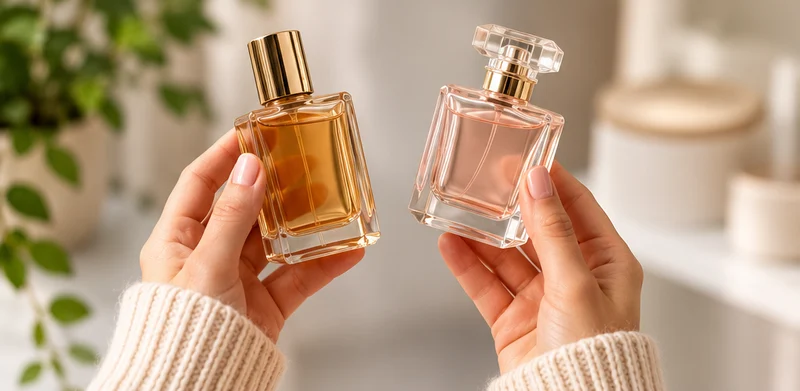
Day 7: Build a pair of your own
Today’s lesson: use what you learned about weight, spray order, and separate application spots to test a combination that interests you.
Choose two perfumes from your collection and open our pair checker. Select the main notes and check the suggested pairing guidance. If one perfume has a heavier note, apply it first with two sprays and add one spray of the lighter perfume on top. If both notes have the same weight, put them on different spots instead.
Start with notes you already enjoy separately. You don’t need to find a dramatic contrast; a small change in texture or freshness can be enough to make a familiar perfume feel different.
Notice: Write down what you would change next time. Maybe you’d use less of one perfume, switch the application spots, or try the same base with a different lighter note.
What to write down
A few words are enough. The point is to compare the pairing when it first goes on with how it smells after it has had time to settle.
| Perfumes | Order | Sprays | After 20 min | Later |
|---|---|---|---|---|
You can also use the notes to spot patterns. If you repeatedly prefer a woody base under florals, for example, that is more useful than trying to memorize every possible pairing. For more combinations to explore, browse perfume layering combinations or our best perfumes for layering.
Questions about perfume layering for beginners
Is perfume layering hard for beginners?
No. Start with two perfumes and a simple rule: heavier first, lighter second. Test one pair at a time and keep the number of sprays low until you know how the scents behave together.
How many perfumes do I need to start?
Just two. You can learn the basics with a pair you already own; there is no need to buy a special layering wardrobe or collect lots of fragrance notes.
What if I don't know my perfume's notes?
Check the fragrance’s packaging or its official description for the main notes. If the full note list feels confusing, choose one prominent note to start with and use our layering finder to explore possible matches.