The Best Perfume Bases for Layering: 7 Notes That Go With Everything
The 7 most versatile perfume notes for layering, from white musk to amber: what each one pairs with, where it goes in the order and which partners to avoid.
In this guide
- Quick list: 7 versatile layering bases
- What makes a perfume a good layering base
- 1. White musk: the safest starting point
- 2. Sandalwood: creamy depth for florals and sweets
- 3. Vanilla: the base that goes with almost anything
- 4. Amber: warmth for florals and woods
- 5. Bergamot: brightness for everything heavy
- 6. Rose: a floral that adapts to anything
- 7. Cedarwood: a dry base for fresh scents
- How to choose your base
- Questions about layering bases
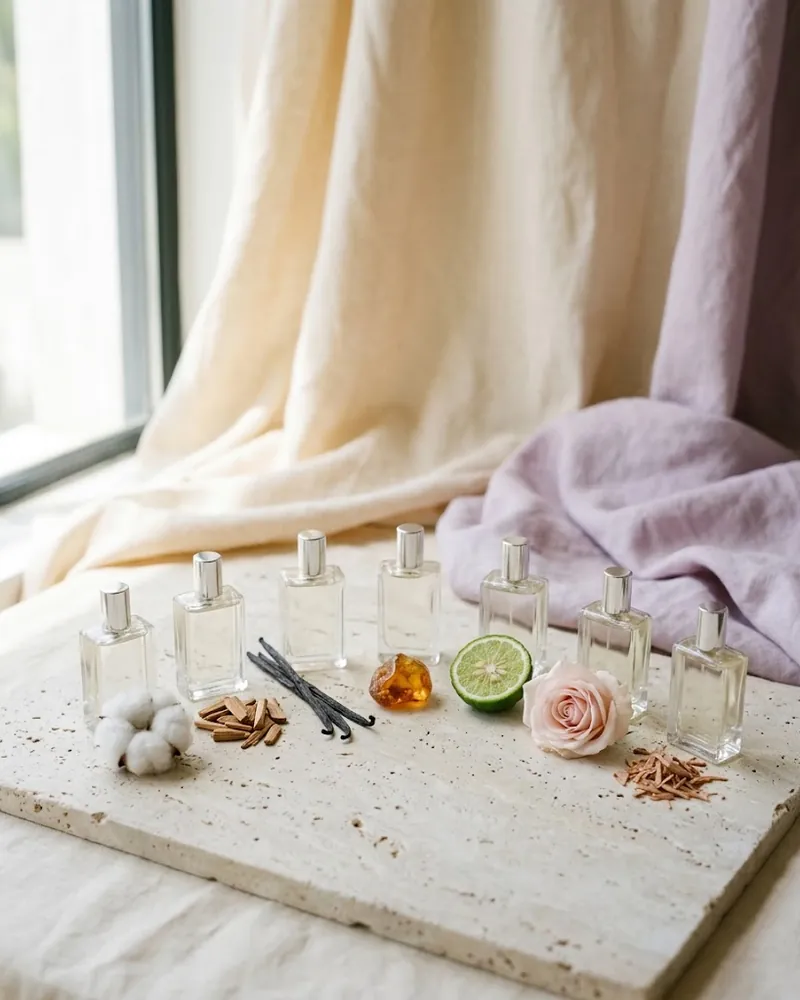
The most versatile perfumes for layering are built around a handful of easy-going notes: white musk, sandalwood, vanilla, amber, bergamot, rose and cedarwood. Each one works with a long list of partners, so one bottle gives you many combinations.
Below is what each base pairs with, where it goes in the layering order and the partners to skip. If you already own a perfume built around one of these notes, you already own a layering base.
Quick list: 7 versatile layering bases
| Base note | Weight | In the order | Pairs with | Careful with |
|---|---|---|---|---|
| White musk | Medium | On top of heavy notes, under light ones | Citrus, fruit, florals, vanilla, woods | Nothing clashes, but it can get lost under smoky notes |
| Sandalwood | Heavy | Usually first | Vanilla, rose, jasmine, musk, citrus | Sharp aquatic notes |
| Vanilla | Heavy | Usually first | Almost everything | Other very sweet notes, in large amounts |
| Amber | Heavy | Usually first | Florals, woods, coffee, vanilla | Sea salt and aquatic notes |
| Bergamot | Light | Always on top | Musk, woods, florals, vanilla | Smoky notes like oud and leather |
| Rose | Medium | Over warm notes, under fruit | Amber, woods, musk, vanilla, berries | Lavender and other herbal notes, in large amounts |
| Cedarwood | Medium | Over heavy notes, under light ones | Citrus, lavender, florals, vanilla | Juicy fruit, which can turn sour |
The weights come from the same classification our layering finder uses. For the full method, see how to layer perfume, or print our free perfume layering chart.
What makes a perfume a good layering base
A good base does three things: it lasts long enough to hold a second scent, it has a simple, recognizable character, and it gets along with many note families. That’s why single-note or “skin scent” perfumes make better bases than complex, loud ones.
You don’t need a perfume sold as a “layering” scent. Check the main notes of what you already own: if one of the seven notes below leads the list, that bottle is a base.
1. White musk: the safest starting point
White musk smells like clean skin and soft laundry. It’s the easiest base because it gets along with every note family, and it makes almost anything smell softer and more wearable.
It’s medium weight, so it goes on top of heavy notes like vanilla or sandalwood and underneath light ones like bergamot or pear.
- Pairs with: bergamot, pear, raspberry, rose, iris, vanilla, sandalwood.
- Careful with: very smoky perfumes. Nothing clashes, but musk tends to disappear under oud or leather.
Coconut + White musk
Creamy coconut on clean skin, like sunscreen on a towel. Musk keeps coconut from turning into dessert, so it works for everyday summer wear.
Layering order: Both are medium, so spray them on different spots: musk on the wrists, coconut on the neck.
Check this pair in the finderFor more musk pairs, see our clean perfume layering combos.
2. Sandalwood: creamy depth for florals and sweets
Sandalwood is smooth, milky and slightly woody. It gives fresh, floral and sweet perfumes more body without making them heavy or dark.
It’s a heavy note, so it usually goes first. When the partner is also heavy, like vanilla or amber, spray them on different spots.
- Pairs with: vanilla, rose, jasmine, tuberose, white musk, bergamot, fig.
- Careful with: sharp aquatic and marine perfumes, which can make it smell thin.
Jasmine + Sandalwood
Heady white flowers resting on creamy wood. Sandalwood calms jasmine down, so it feels elegant rather than loud.
Layering order: Sandalwood first (2 sprays), jasmine on top (1 spray).
Check this pair in the finder3. Vanilla: the base that goes with almost anything
Vanilla is warm, sweet and long-lasting. It softens sharp notes and warms up cool ones, which is why it appears in more layering combinations than any other note.
It’s heavy, so it goes first under lighter scents. The one risk is sweetness: with caramel, coconut or a sugary body mist, use fewer sprays.
- Pairs with: bergamot, pear, lavender, rose, sandalwood, cherry, pistachio, coffee.
- Careful with: other very sweet perfumes in large amounts.
Vanilla + Lavender
Clean herbs on a warm base, like a lavender latte. Lavender cuts the sweetness and vanilla softens lavender’s sharp edge.
Layering order: Vanilla first (2 sprays), lavender on top (1 spray).
Check this pair in the finderAll 15 of our favorite vanilla pairs are in vanilla perfume layering combinations.
4. Amber: warmth for florals and woods
Amber is glowing, resinous and a little sweet, like honey and warm skin. It turns light florals into evening scents and makes woods feel richer.
It’s heavy and strong, so it goes first and 1 or 2 sprays is enough.
- Pairs with: rose, jasmine, iris, orange blossom, sandalwood, vanilla, coffee.
- Careful with: sea salt and marine notes, which clash with it, and sharp citrus, which it tends to flatten.
Amber + Iris
Powdery iris over warm resin, like a cashmere scarf and a lipstick. Soft but long-lasting, a good office scent for cold months.
Layering order: Amber first (1 spray), iris on top (2 sprays).
Check this pair in the finder5. Bergamot: brightness for everything heavy
Bergamot is citrus with a slightly bitter, floral edge. It’s the easiest way to make a heavy or sweet perfume feel fresher and more daytime.
It’s a light note that fades first, so it always goes on top. Use a bergamot-led perfume as your “top” bottle, the one you reach for to lift everything else.
- Pairs with: white musk, vanilla, sandalwood, cedarwood, vetiver, rose, fig.
- Careful with: smoky notes like oud, leather and tobacco, which tend to clash with it.
Rose + Bergamot
A rose with a squeeze of citrus. Bergamot makes rose feel younger and brighter, perfect for daytime.
Layering order: Rose first (2 sprays), bergamot on top (1 spray).
Check this pair in the finder6. Rose: a floral that adapts to anything
Rose can be fresh, jammy, powdery or dark, depending on what you put with it. That flexibility makes it the most useful floral base.
It’s medium weight: it goes on top of warm notes like amber, sandalwood and vanilla, and under light fruit like raspberry or pear.
- Pairs with: amber, sandalwood, white musk, vanilla, patchouli, raspberry, oud.
- Careful with: large amounts of lavender or other herbal notes, which can make it smell like a soap bar.
Rose + Cedarwood
Velvety petals on dry, pencil-shaving wood. Cedar takes rose out of the grandmother’s dressing table and makes it crisp and modern.
Layering order: Both are medium, so spray them on different spots: cedarwood on the chest, rose on the wrists.
Check this pair in the finder7. Cedarwood: a dry base for fresh scents
Cedarwood smells dry, clean and woody, like pencil shavings. It’s the best base for people who find vanilla or amber too sweet, because it adds structure without any sugar.
It’s medium weight: it goes on top of heavy notes and under light ones like citrus and lavender.
- Pairs with: bergamot, lavender, orange blossom, iris, rose, vanilla.
- Careful with: very juicy fruit, which can smell sour over dry wood.
Cedarwood + Lavender
Herbs on dry wood, like a linen closet. Clean, calm and unisex.
Layering order: Cedarwood first (2 sprays), lavender on top (1 spray).
Check this pair in the finderHow to choose your base
Start with what you already own:
- Mostly fresh and citrus perfumes? Add a white musk or cedarwood base. They give fresh scents something to hold on to.
- Mostly florals? Add sandalwood or amber. They make florals warmer and longer-lasting.
- Mostly sweet or gourmand perfumes? Add bergamot or white musk to lighten them. Skip another vanilla.
- Mostly woody perfumes? Add rose or bergamot for contrast.
A versatile collection doesn’t need many bottles. One musk, one warm base (sandalwood, vanilla or amber) and one bright top (bergamot) already give you dozens of combinations. Buying for someone else? Our guide to choosing a perfume gift set works by scent family too. Want the polished side? See 12 perfume combinations that smell expensive. Not sure which family is yours? Try what your perfume says about you.
Questions about layering bases
What is the most versatile perfume note for layering?
White musk. It gets along with every note family, softens sharp scents and works both under light notes and over heavy ones.
Is vanilla a good layering base?
Yes, one of the best. It’s heavy and long-lasting, so it holds lighter scents in place. Avoid pairing it with other very sweet perfumes, or use fewer sprays when you do.
Should I buy a perfume just for layering?
Not at first. Check your collection for a perfume led by musk, sandalwood, vanilla, amber, bergamot, rose or cedarwood. If you have none, a simple white musk is the most useful first buy.
Which notes are hardest to layer?
Very smoky and very sharp notes. Oud, leather and tobacco can swallow lighter scents, and sharp aquatic notes clash with amber and smoky notes. Use them in small amounts.