How to Layer Three Perfumes Without Making a Mess (6 Easy Stacks)
Learn how to layer three perfumes without overwhelming your scent. Follow a simple layering order and try six easy fragrance combinations.
In this guide
If you’ve already tried layering two perfumes, adding a third can be tempting. It opens up more possibilities, but there’s one easy way to get it wrong: using too many strong scents at once.
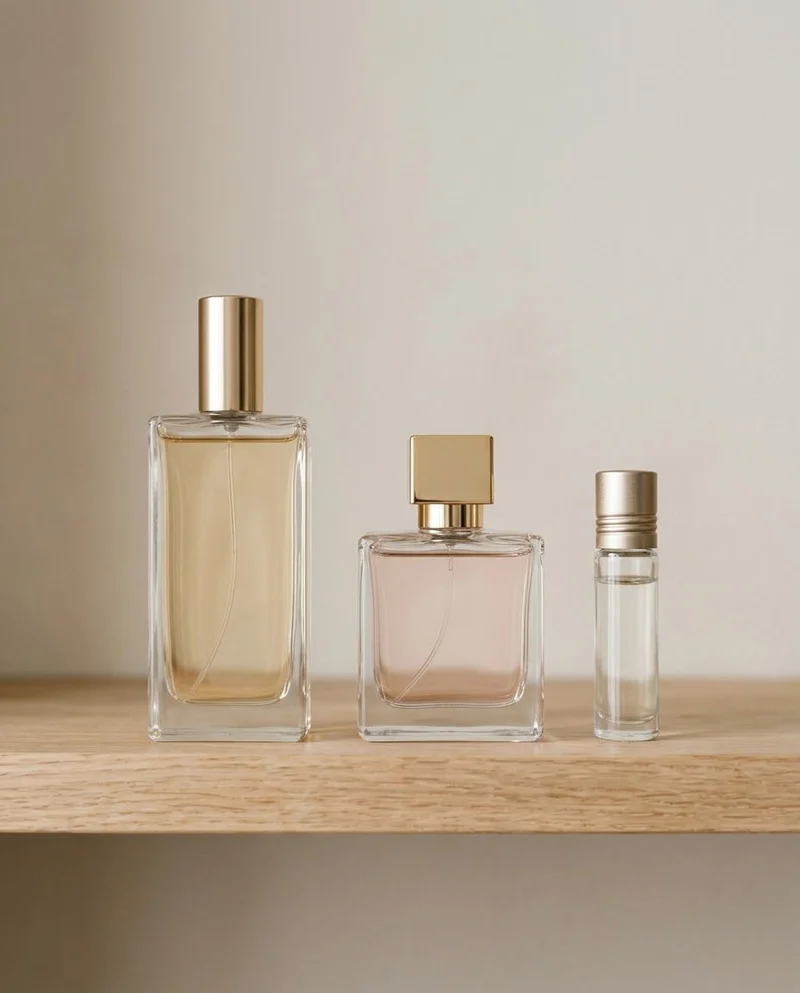
The trick is to give each perfume a different job. Choose one heavy fragrance as your base, a medium-weight scent for the middle, and a light fragrance for the finishing touch. Apply them in that order, and each layer has room to contribute something different.
You don’t need nine sprays or three competing statement scents. A little structure makes perfume stacking much easier.
The 3-layer rule
Think of three perfumes as three parts of one fragrance:
- Heavy base: apply first. Use 2 sprays to set the foundation.
- Medium middle: apply next, with 1 spray to add character.
- Light top: finish with 1 spray for a fresher touch.
That’s 4 sprays in total, not 9. The heavier perfume goes closest to your skin, while the lighter one sits on top.
What if two perfumes have the same weight? Don’t spray one directly over the other. Apply them to different spots instead, such as your wrists and neck.
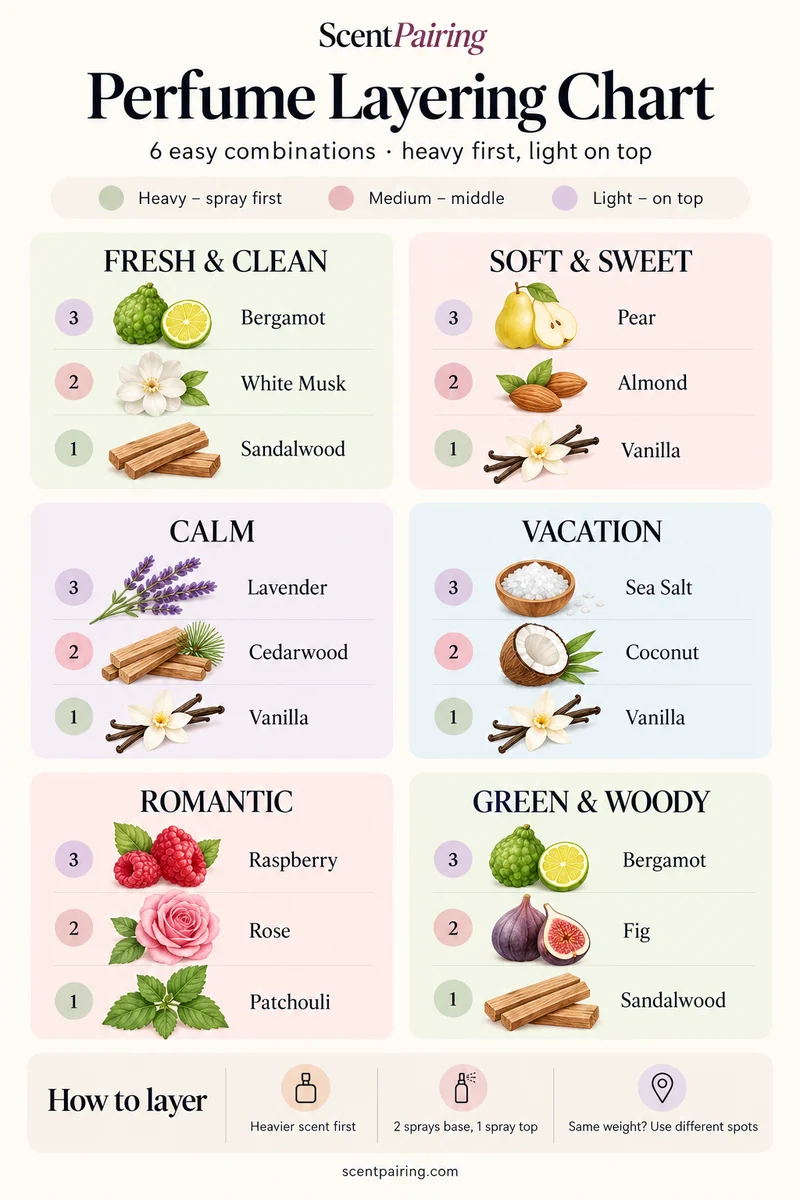
Our printable perfume layering chart uses the same heavy-medium-light logic, and the layering finder shows the weight of every note.
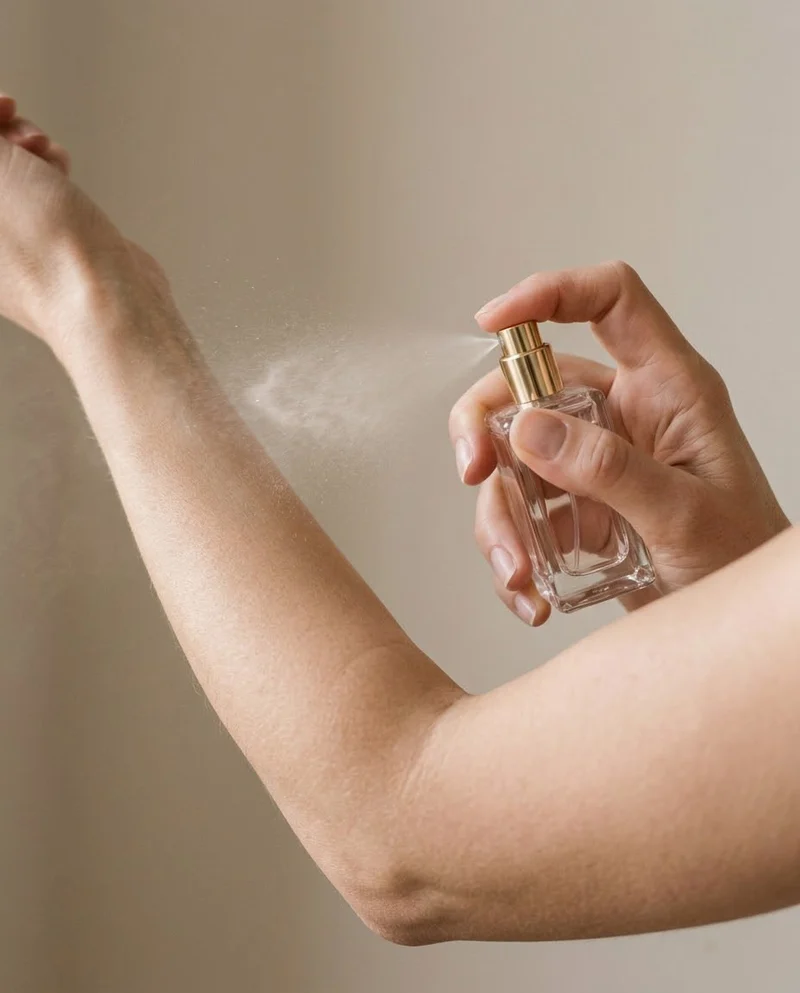
6 three-perfume stacks to try
These six combinations bring together different fragrance families, from warm and creamy to fresh and floral. Each one has a clear base, middle and finishing note. Start with the stacks that match the scents you already own.
Sandalwood + Iris + Bergamot
Smooth wood, powdery petals and a squeeze of fresh citrus. Iris softens the middle before bergamot brightens the finish; keep the bergamot light so it doesn’t turn sharp.
Layering order: Sandalwood first (2 sprays), iris over it (1 spray), bergamot on top (1 spray).
Check this pair in the finderVanilla + White musk + Lavender
Vanilla cream, a freshly washed shirt and a herbal finish. Musk takes the dessert edge off the vanilla and lavender adds a crisp lift, so it reads understated rather than sweet.
Layering order: Vanilla first (2 sprays), white musk over it (1 spray), lavender on top (1 spray).
Check this pair in the finderCaramel + White musk + Sea salt
Salted caramel on clean skin, with a breezy seaside finish. The two sprays of sea salt matter here: they keep the caramel from burying everything else.
Layering order: Caramel first (1 spray), white musk over it (1 spray), sea salt on top (2 sprays).
Check this pair in the finderPatchouli + Jasmine + Bergamot
A dark green garden with white flowers and a flash of citrus. A good choice if you like florals but want something less traditionally sweet.
Layering order: Patchouli first (1 spray), jasmine over it (1 spray), bergamot on top (1 spray).
Check this pair in the finderOud + Rose + Raspberry
Dark wood, velvety red roses and crushed raspberries. Rose leads, oud stays in the background, and the fruit adds a juicy contrast. One spray of oud is the limit.
Layering order: Oud first (1 spray), rose over it (2 sprays), raspberry on top (1 spray).
Check this pair in the finderAmber + Tuberose + Orange blossom
Golden resin wrapped in creamy white flowers. Tuberose gives the middle body, while orange blossom keeps the top light and sparkling: floral first, sweet second.
Layering order: Amber first (1 spray), tuberose over it (1 spray), orange blossom on top (1 spray).
Check this pair in the finder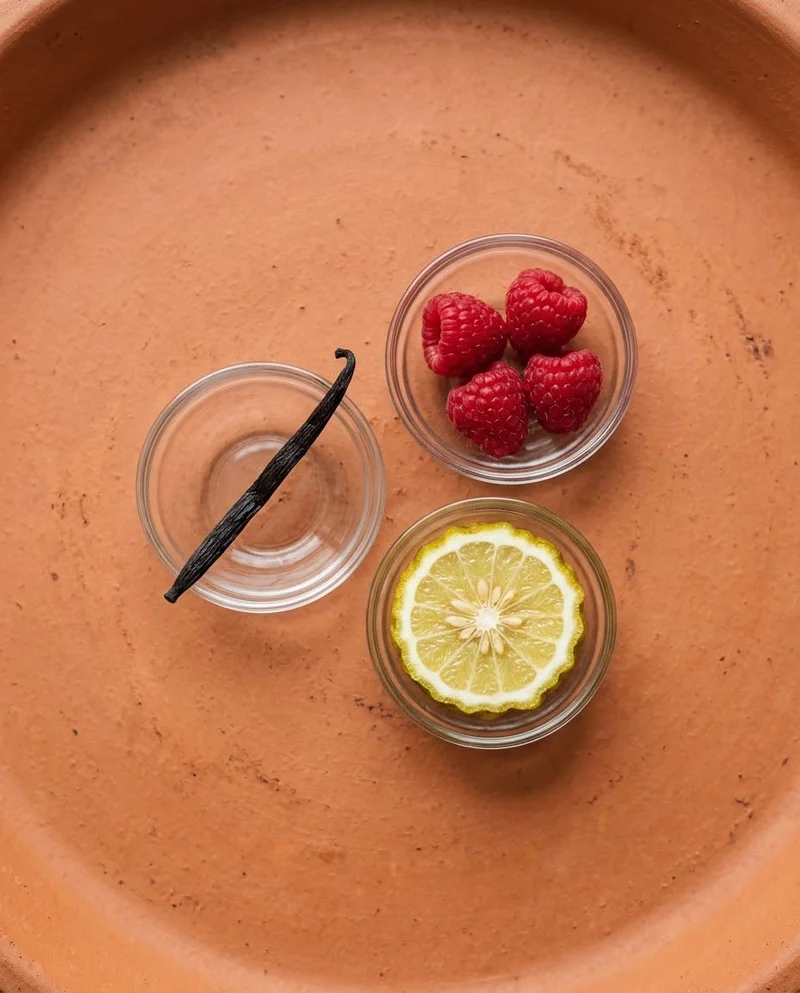
When to stop at two
Three perfumes aren’t automatically better than two. Stick with two in these situations:
- The pair already works. If it smells balanced and you enjoy wearing it, don’t add a layer just for the sake of it.
- The third perfume is as strong as the base. Another heavy fragrance makes the stack crowded. Look for a lighter note instead.
- You can’t tell what each perfume adds. If the result is one big cloud, remove a layer and start again.
A good combination has some definition: you should notice the different notes without smelling each wrist separately. If a blend turns muddy, our list of perfume layering mistakes covers the usual causes.
Build your own three-perfume stack
Once you know the heavy-medium-light approach, you can build stacks from the perfumes you already own. Choose a base, find a medium-weight scent that suits it, then finish with something lighter for contrast. Check each pair in the pair checker before adding the third layer.
New to layering altogether? Start with two perfumes and our guide on how to layer perfume.
Questions about layering three perfumes
Can you layer three perfumes?
Yes, when each one has a different weight: one heavy, one medium and one light, applied in that order.
How many sprays when layering three perfumes?
Start with four in total: two of the heavy base, one of the medium middle and one of the light top. Adjust from there.
Which perfume goes first when layering three?
The heaviest one, then the medium one, then the lightest. If two have the same weight, put them on different spots.